Have you ever experienced a moment where your mind wanted to move forward, build, and create—but your physical body flatly refused to cooperate?
I first learned about Dr. Patricia Worby while completing my Trauma Informed Coach certification with The Chrysalis Effect. Patricia was one of the guest experts hosted on a live Q&A panel for our cohort. There were several brilliant practitioners on that panel, but out of everyone, I instinctively chose to work with her.
Why? It was her personal brand.
Patricia hadn’t just studied trauma—she had written an entire book documenting her own recovery journey.
In the world of thought leadership and personal branding, publishing your story is the ultimate bold move.
On top of that, she had built a rich YouTube channel packed with years of research, client stories, and practical wisdom.
The very first thing I did after that Q&A panel was buy her book on Kindle and devour it in 24 hours.
As you just heard in the interview, I booked an initial consultation right away.
It was immediately clear that I needed her guidance to navigate the sudden emotional outbursts and overwhelming triggers I was experiencing in my everyday life—both in my home with my kids and in my business.
Working with Patricia proved what I had felt in my body for years: that brain fog, sudden emotional reactivity, and chronic fatigue are not character flaws or signs that you are broken. They are protective, cellular responses driven by trapped emotional memory in the survival brain.
In Season 1, Episode 4 of It’s Not That Personal, Dr. Patricia and I sit down for an honest conversation about why traditional talk therapy falls short when resolving somatic patterns, and how learning to process triggers at the nervous system level is the ultimate foundation for step-level personal growth and authentic personal branding.
Can Trapped Emotional Memory Cause Brain Fog and Fatigue?
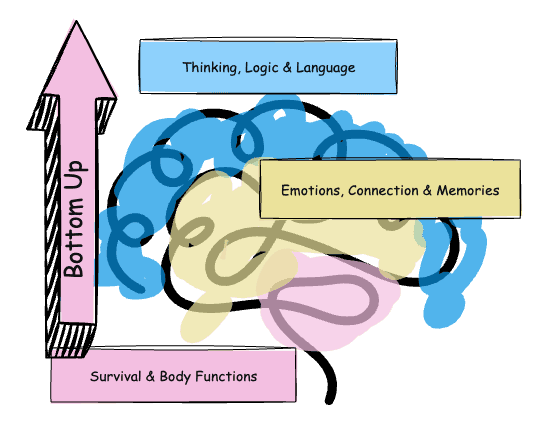
Can trapped emotional memory cause brain fog, chronic fatigue, and unexplainable pain? Yes. When unresolved emotional trauma and subconscious stress patterns remain stored in the body, the nervous system perceives an ongoing threat. This “cellular danger response” downshifts mitochondrial energy production to protect you, resulting in physical symptoms like brain fog, muscle pain, and chronic exhaustion. Traditional talk therapy often fails to resolve these symptoms because it engages the cognitive cortex rather than the survival brain. By using “bottom-up” somatic tools like Havening and EMDR, practitioners can release stored emotional memory, restore cellular energy, and step into sustainable, authentic leadership.
Why Personal Branding Requires Somatic Safety
When transitioning from clinical or corporate work into stepping out publicly as a high-authority coach, many practitioners assume their biggest roadblock is finding the right strategy, building the perfect website, or tweaking their offer.
In reality, the biggest barrier is almost always your body’s involuntary resistance.
When I was experiencing those sudden triggers and emotional outbursts, or overthinking and procrastination, it wasn’t because I lacked marketing knowledge or ambition.
My nervous system was registering exposing myself in business as a threat to my safety.
Experiencing Patricia’s approach to somatic healing reinforced a principle I hold deeply in my coaching practice today: Your brand authority is directly tied to your inner nervous system capacity.
When you publish a book, share raw videos, or stand in your authority (just as Patricia did to build her own brand), your nervous system must feel safe handling visibility.
When you clear the stored survival patterns holding your body hostage, you gain the physiological stability required to lead, speak your truth, and attract the exact clients you are meant to serve.
Why Somatic Regulation is Essential for the “Therapist to Coach” Transition
If you are a therapist, healer, or practitioner transitioning into high-ticket coaching, moving out from behind traditional clinical frameworks can trigger deep survival responses. Here is why somatic healing is non-negotiable for building a successful personal brand:
Talk Therapy Engages the Wrong Brain Structure: Cognitive processing happens in the prefrontal cortex, but trauma and stress responses live in the limbic system and brainstem. To create lasting change, you must work “bottom-up” through bodily sensations.
Burnout is Physical Protection, Not Weakness: As Patricia explains, fatigue occurs at the cellular level when mitochondria downshift energy output in response to perceived danger. Pushing harder only deepens the cycle.
Clients Register Your Authority Through Co-Regulation: High-value coaching clients don’t just buy your methodology; they co-regulate with your presence. When your nervous system is clear of trapped emotional debt, your authority becomes effortless and magnetic.
Connect with Dr. Patricia Worby
To dive deeper into Patricia’s work, explore her books, or learn more about her clinical practice, use the links below:
Whether you are navigating your own unexplainable physical symptoms or ready to build an authentic, high-authority personal brand rooted in somatic safety, this conversation offers actionable wisdom for your journey.
Ready to Transition from Therapist to High-Authority Coach?
If you’re ready to resolve subconscious resistance, own your unique methodology, and build a practice that honors your energy, explore my Free Personal Branding Crash Course or learn more about 1:1 strategy work at rituriedweg.com.




Comments +